Living Happy
In today’s technologically intertwined world, countless devices silently rely on a hidden force known as embedded software to function. Embedded software is a specialized type of software designed to be embedded within electronic systems, discreetly orchestrating their operations from within.
Unlike traditional software that runs on desktop computers or laptops, embedded software is designed to be compact, efficient, and highly reliable, often operating on constrained hardware with limited resources.
From smartphones to self-driving cars, the impact of embedded software is pervasive. It seamlessly integrates into our daily lives, empowering devices with intelligence, connectivity, and automation. Understanding embedded software is crucial for navigating the complexities of modern technology and unlocking its transformative potential.
Through this article, we will delve into the fascinating world of embedded software, exploring its fundamentals, applications, and the challenges faced in its development.
Embedded Software: An Introduction
Embedded software is a type of software that is designed to run on a specific hardware device. It is often used in devices that have limited resources, such as memory and processing power. Embedded software is typically written in a low-level programming language, such as C or assembly language.
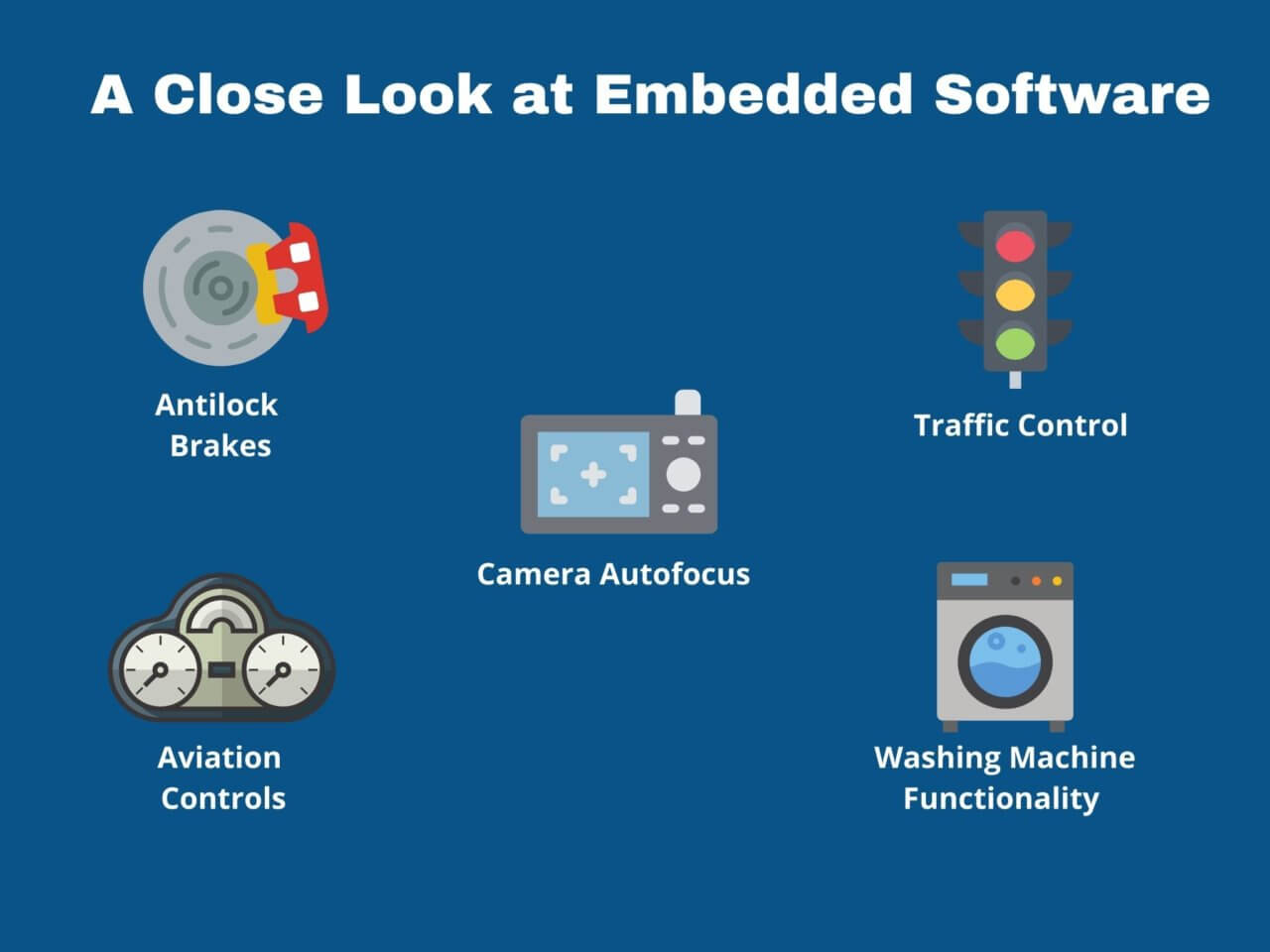
Embedded software is used in a wide variety of devices, including cars, medical devices, and industrial equipment. In cars, embedded software is used to control engine performance, braking, and other safety features. In medical devices, embedded software is used to monitor patient vital signs and deliver medication.
In industrial equipment, embedded software is used to control manufacturing processes and automate tasks.
Benefits of Embedded Software
There are several benefits to using embedded software. First, embedded software can improve the performance of a device. By optimizing the software for a specific hardware platform, developers can improve the speed, efficiency, and reliability of the device.
Second, embedded software can reduce the cost of a device. By using a single software platform for multiple devices, developers can save time and money on development and testing. Additionally, embedded software can help to reduce the size and weight of a device, which can make it more portable and easier to use.
Third, embedded software can improve the safety of a device. By using embedded software to control critical functions, such as braking and engine performance, developers can help to prevent accidents and injuries.
Challenges of Embedded Software Development
There are also several challenges associated with embedded software development. First, embedded software is often complex and difficult to develop. Developers must have a deep understanding of the hardware platform and the software development environment. Additionally, embedded software must be reliable and efficient, as it is often used in critical applications.
Second, embedded software development can be time-consuming and expensive. Developers must spend a significant amount of time testing and debugging the software to ensure that it is reliable and safe. Additionally, embedded software development often requires specialized tools and equipment, which can add to the cost of development.
The Future of Embedded Software
Embedded software is a rapidly growing field. As more and more devices become connected to the internet, the demand for embedded software will continue to grow. In the future, embedded software will be used in a wide range of applications, including self-driving cars, smart homes, and medical devices.
Conclusion
Embedded software is a critical component of modern devices. It offers several benefits, including improved performance, reduced cost, and enhanced safety. However, embedded software development can be challenging due to its complexity and the need for reliability and efficiency.
As the demand for embedded software continues to grow, the future looks bright for this exciting field.
Embedded Software Applications
Embedded software has a wide range of applications, as it is found in many devices we use daily. These include:
- Consumer electronics: Smartphones, tablets, smartwatches, gaming consoles, and home appliances.
- Industrial automation: Robotics, programmable logic controllers (PLCs), and distributed control systems (DCSs).
- Medical devices: Pacemakers, insulin pumps, and diagnostic equipment.
- Automotive systems: Engine control, braking, and infotainment systems.
- Aerospace and defense systems: Flight control, navigation, and communication systems.
The diversity of embedded software applications highlights its versatility and adaptability to different sectors.
Embedded Software Development Tools
To develop embedded software efficiently, specific tools are utilized, including:
- Integrated development environments (IDEs): These provide a comprehensive suite of tools for writing, editing, debugging, and testing embedded software.
- Compilers: Tools that convert embedded software code into machine code that can be executed on specific hardware platforms.
- Debuggers: Tools that allow developers to step through their code line by line, identifying potential errors and inefficiencies.
- Simulators: Tools that provide a virtual environment for testing embedded software before deployment on actual hardware.
- Real-time operating systems (RTOSs): Software that manages the execution of multiple tasks on embedded systems, ensuring reliable and predictable performance.
Choosing the appropriate tools is crucial for optimizing embedded software development processes.
Emerging Trends in Embedded Software
The embedded software industry is witnessing several emerging trends:
- Internet of Things (IoT): Embedded software is playing a vital role in connecting devices to the internet, enabling remote monitoring, control, and data collection.
- Artificial intelligence (AI): Embedded software is incorporating AI algorithms for tasks such as image recognition, natural language processing, and decision-making.
- Security: With the increasing connectivity of embedded devices, ensuring their security is becoming paramount.
- Cloud computing: Embedded software is leveraging cloud-based services for data storage, analytics, and remote software updates.
- Low-power design: Embedded software is being optimized for low power consumption to extend the battery life of devices.
These trends are shaping the future of embedded software development and driving innovation in various industries.